Snowboard Sizing Chart Ride Snowboards
Snowboard width sizing is very important and I will outline why in more detail below.It can seem difficult to get this right but this post should help to make it easier.There will be width sizing charts further down in this post.However, anyone can just post a width sizing chart and you wouldn’t know how accurate it is or what the reasoning behind it is.So before looking at the charts I suggest you read the rest of the article first.UPDATE: Note that this post has had a major update as at February 23rd, 2018. This has been a long time in the making and I have done a lot of research, using real life data, to update my tables and whilst they were fairly accurate before, I feel like they are now even more fine-tuned. But do note all of the assumptions outlined under the charts below.
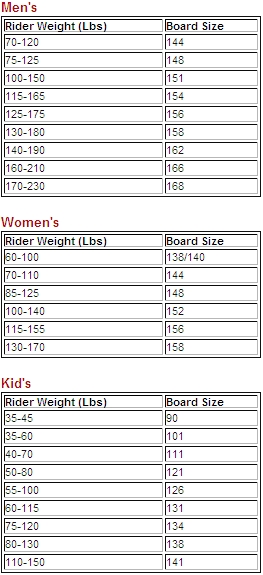
- Snowboard Sizing Chart Ride Snowboards For Kids
- Snowboard Sizing Chart Ride Snowboards For Women
- Snowboard Sizing Chart For Women
How to define the ideal widthThere are two schools of thought on the best width of a snowboard.School of thought #1: The best width for you is where your boots overhang on both the heel edge and toe edge by anywhere between 1 & 2 centimetres (1/4 to 3/4 inch).School of thought #2: The best width for you is when your feet are roughly exactly the width of the board at the inserts (where the feet will be on the board – i.e. Where the bindings are) or a little over. In other words, in bare feet your heel would be right on the heel edge and your toes right on the toe edge (at your binding angles).It should also be noted that this should be measured using the “underside of the board” as this is the side of the board that makes contact with the snow. The top side of the board is typically narrower due to the angle on the edges of a snowboard.So which one is correct?Both!Yes they are actually both right and are actually essentially the same thing.
This is because when your feet take up the width of the board edge-to-edge then your boots are likely to hang over 1-2cm (1/4 to 3/4 inches) on both heel and toe side (for a total of 2-4cm of difference between foot length and boot length) – depending on the profile of the boots.NOTE: The lowest profile boots I’ve seen add around 2cm total to the length of your feet and the longest profile I’ve measured added 4.5cm compared to the length of the foot.Both schools of thought are the same for the same reasons too. Which brings me to the importance of getting the width right. Why Does Width Matter?School of thought number 2 suggests that the feet should be edge to edge (or a little over) as it is your feet that apply pressure to the edges when you’re turning the board.Whilst there is a bit of leeway (a little bit inside the edges and you won’t notice it at all), if your feet are too small for the board (i.e. Don’t reach the edges) then it is going to be harder to apply pressure to the edges which will make turn initiation more arduous and the board will feel heavy and less responsive.NOTE: People who are lighter in weight will notice this even more if they are too far inside the edges.
People who weight more won’t be as effected by this as they have more force to apply pressure with.But too much overhang would violate school of thought number 1. You can probably get away with up to 2.5cm (1 inch) of overhang on the heel-edge and 2.5cm (1″) toe-edge, in reality – but to be on the safe side it is better to try to stay under 2cm (3/4″) – especially if you like to lay down some deep carves.If you can’t get your overhang even on both toe and heel edge, it’s better to have extra overhang on your heel-edge than on your toe-edge. This is because it’s easier to get lower on the toe-edge – so drag is more likely. For example it’s better to have 2.5cm (1″) on your heel and 2cm (3/4″) on your toe, if you have total of 4.5cm (1 3/4″) of overhang, than to have 2.5cm on the toe and 2cm on the heel.TIP: If you can’t set up your bindings so that the toe and heel have equal overhang, always go with more overhang on your heel than your toe. Width Sizing TablesUnfortunately the width at the inserts (where the bindings go) of snowboards is not something that snowboard companies publish when they release the board specs.
This would certainly make it a lot easier and I can only speculate as to why this information isn’t released.What is published is the waist width, so this is what we have to go with to make an estimation of the right width (most companies also publish tip and tail width but waist width is a more accurate way to estimate the width at the inserts).Due to brand variances, differences in side cut, stance width variations and binding angles it is difficult to get this completely accurate in a chart. However as a general guideline the following tables should get you close.If you would like to know more about these variances and how much impact they can have check out the “extra reading” section below.Factors such as boot profile (which is essentially how much difference there is between foot length and boot length), thickness of the base plate of your bindings and the bevel on the toe and heel of your boots will also play a part.Remember that you do have a bit of room to play with and you don’t need to get this exact, but getting close is a good idea, IMO. The charts below should help you to get close.The further away from the average foot size (i.e. The narrower or wider compared to the “normal” your feet are), the less accurate it will be – and the less board options there will be.The following charts were created by compiling information from various width sizing charts in addition to intensive research into the average side cuts, reference stances and waist width of hundreds of different boards (by creating diagrams of those boards and measuring different feet sizes against those diagrams). I have also measured the width at the inserts of a number of different snowboards in different lengths and widths and from different brands and part of the process of creating this chart was to find the average ratio of width at waist to width at inserts. Basic ChartsThese are the basic charts. They are pretty much what you will usually see, but I didn’t think they provided enough accuracy.
But at a quick glance this is roughly where you might fit. Refer to the “what If I don’t own boots yet” chart further down for foot sizes in inches + other boot measurements (UK, Euro).The Following Charts break it down a bit further but are still subject to the same variances (e.g. Boot bevel, boot profile).Men’s Waist Width ChartThis chart has been updated after further research and I have now created two charts to take into account binding angles, where previously there was just one chart.Not sure of your preferred binding angles yet?:NOTE: The Maximum Width is based on foot size. The Minimum Width is based on boot size. These tables are based on a number of assumptions, including:.
That there is a 3cm difference between foot size and boot size on an average snowboard boot. That a 27.5cm foot will fit into a US10 boot – which is also consider a mondo print of 280mm. The idea of a mondo-print is that it fits the foot of the same length – so a 280mm (i.e.
28.0cm) would fit a foot of 28.0cm. In reality I have found, especially these days, it’s usually 0.5cm less – i.e. A 27.5cm will fit in a US10 (280mm mondo), a 29.5cm foot will fit in a US12 (300mm mondo). But if this assumption is not the same for you, then simply follow the charts above and base your maximum on your foot size and your minimum on your boot size.
That the ratio of the width at the inserts compared with the waist width of that board that you are looking at will be similar to the average ratio of the boards that I tested. This shouldn’t make a huge difference unless the ratio of the board you are looking at is significantly different to the average that I used. The width at the inserts measurements that I took for the ratios that I used, are based on reference stance. A wider or narrower stance would produce different results.
However, this difference shouldn’t be too significant. Difference in ratios for wider and narrower boards: A different ratio was used for wide boards, regular boards and narrow boards – based on averages for those sized boards. Adjustments made for large sized boots, based on assumptions about boot bevel and outersole footprint: An assumption was made about boots that were larger than a US12 that there would be elements about those boots, typically that made them more able to get on a snowboard including being lower profile, and having a reasonable bevel on the toe and heel. If you think you are going to need something bigger than a 250mm waist width then you will probably have more options in the men’s snowboards.These table are based on a number of assumptions, including:. That there is a 3cm difference between foot size and boot size on an average snowboard boot. That mondo print is typically a good fit – e.g. A 250mm (25cm) mondo print will fit a 25cm foot.
If this is not the case for you, use your boot size for the minimum and your foot size for the maximum. That the ratio of the width at the inserts compared with the waist width of that board that you are looking at will be similar to the average ratio of the boards that I tested. This shouldn’t make a huge difference unless the ratio of the board you are looking at is significantly different to the average that I used. The width at the inserts measurements that I took for the ratios that I used, are based on reference stance.
A wider or narrower stance would produce different results. To measure your foot length, place your heel flat against the wall and measure along the floor from the wall to your big toe.Alternatively place your foot on a piece of paper and mark each end of the foot on the piece of paper and then measure between the marks.NB: Your snowboarding boot size may not be the same as your normal shoe size – and sizing may vary.Want more Accuracy?If you want to be completely sure you are getting the right width before you buy and are fussier about this, there are a couple of other options.
While snowboarding is all about breaking the rules, selecting your snowboard setup is one thing that should be done right. At The House Boardshop, we want to help you find the gear made for you and your specific riding habits. By sharing a bit of info, we hope to answer all of your questions.
Advice and general guides can be found below for sizing a snowboard, choosing the, and picking out the. If you read through this guide and still have questions, feel free to give us a call, we have an experienced staff standing by to help you. Contents.Snowboard SizingThrough years of experience, snowboarders have developed many ways to find the size snowboard they think may be correct. Some still use the traditional sizing method of standing a board up on end and measuring to their chin and others by using various snowboard sizing calculators and formulas. While there is accuracy to these methods, they do not always cover all of the important factors involved when choosing a. Your Board Length Should Be:The following information and snowboard sizing charts are meant to be used as a guideline to decide on a board that is best for you based on various measurements. The truth is, everyone is different and we all have our own expectations when choosing a snowboard.
So peep the information below but don’t forget to also think for yourself. Board Length by WeightYour weight is the most important factor in determining board length.
Having a board that cooperates with your body weight will allow you to ride your best and not have to worry about losing control. If a heavier rider gets a board that is too short, the board tends to get loose and less controllable at higher speeds. A board that is too soft and short can also result in over-flexing and possible wipe-outs. It can go the other way as well. A lighter rider who gets too long of a deck will have a tough time maneuvering and flexing the board.There are some cases when riding style comes into play where it is acceptable to size down your board for a lighter setup and added mobility to help throw down those heavy ass tricks. Freestyle riders who spend most of their time in the park or in the street tend to use sized-down boards for a more skate-inspired style and feel.If you’re on the heavier side, or looking to just ride powder, or both, scaling your board up a bit may also be appropriate.

A slightly longer board will help you keep that nose above the snow line, allowing you to float across the fluff at faster speeds. A longer board will also provide a stiffer board response for added stability.Check out the chart below, it’s a guide to the average snowboard length required for a given rider’s weight. It’s also always a good idea to read the manufacturer’s specifications for each deck because every board is designed for specific functions and each model can vary greatly. Snowboard Size Chart Rider Weight (lb)Rider Weight (kg)Snowboard Size (cm)80 or less36 or less90-6-10-2-14-30-6-13-50-1-13-70-3-12-90-7-11-10 and up95 and up159-168Board Length by HeightHeight is probably the first measurement that comes to mind when thinking of choosing a snowboard length, but it might not be the best sizing method on its own.
Snowboard Sizing Chart Ride Snowboards For Kids
Even so, people have been sizing snowboards by height alone since the beginning and will probably continue to do so forever. There are several methods of sizing snowboards by height that have developed over the years. We have provided you with a few of the more common options below.Using the traditional method, some believe a shorter board for your size range should come up between your collar bone and your chin when the board is stood on end. These shorter length boards are good for beginners and freestyle riders. A longer board could reach from your nose to just over your head. The longer length boards are good for powder and high speed. These are very vague guidelines to live by and not as accurate as some of the other methods available, but still a solid rule of thumb that many riders like to implement into their board buying decision.Some snowboarders like to use snowboard sizing calculators.
Snowboard Sizing Chart Ride Snowboards For Women
Since most snowboarders ride a board that is 85% to 92% of their own body height, plugging a couple numbers into a simple formula can tell you the board length that might fit you best. The formula is as follows: Your Height (in inches) X 2.54 X 0.88 = Your Recommended Board Length. While this formula may seem like the absolute answer because it involves numbers, math and a bit of homework, it doesn’t mean you’re stuck with the number you get as a result.
It is really meant to be used as a starting point when picking out a new deck.So height is an important variable, but don’t forget to factor in your weight, riding style and the manufacturer’s tech specs for each board as well. With that said, use the chart below as a guide to find the average snowboard length required for a given rider’s height. Snowboard Sizing Chart Based on Height Rider Height (ft/in)Rider Height (cm)Snowboard Size (cm)3’7″109cm90-1054’1″124cm110-1204’6″137cm115-1304’10”147cm125-1355’1″155cm130-1405’3″160cm135-1455’4″163cm140-1505’5″165cm145-1525’6″168cm148-1535’7″170cm150-1555’8″173cm152-1555’9″175cm153-1575’10”178cm154-1595’11”180cm155-1606′183cm156-1626’1″185cm157-1636’2″188cm158-1666’3″191cm159-1676’4″193cm160-170Snowboard WidthA key measurement in board sizing that often gets over-looked is the width of the board. The width of a snowboard is usually measured at the board’s narrowest point (usually the center of the board) and should correspond directly to your boot size. Typically, your snowboard boots should hang over the edges of your board just slightly; with too much or too little you could have some trouble.
A board’s waist width is important for two big reasons: achieving maximum edge control and avoiding toe and heel drag.If your snowboard is too narrow for your, a loss of edge control is certain to happen by means of toe and heel drag. Toe and heel drag is bad news, not only will this problem slow you down – it could also cause you to bail. Yes, minor toe and heel drag is manageable, but if you’re setting up for a trick and happen to snag your toes or heels on the lip of a kicker or edge of a feature, it’s probably not going to end well.While width is important, getting a wider board to eliminate the above issues is not always the best answer. Sometimes it is just a matter of adjusting the angle of your bindings, trying bindings with the ability to raise your toes above the edge of your board, or getting boots with the smallest footprint available.Snowboard Size by Ability Level BeginnerIf you’re still learning how to link turns, you’re a beginner. Beginners should abide by the standard weight, length, and width requirements for snowboards, but you might want to check out some softer boards on the shorter side of your size range.A softer board can help get beginners down the hill quicker by flexing softer. This allows you to have more control over the board with less effort.
Stiffer boards require a bit more muscle and exertion, and learning how to ride is already tough enough. It is possible for a board to be too soft.
Snowboard Sizing Chart For Women
Too soft of a board can actually decrease your ability – the key is finding a balance between flex and stability.As for length, a board on the lower end of your size range will allow you to maneuver the board easier and can also help you link those turns fluently. Scaling down the size of your board will give you more control by slightly slowing you down too.
It won’t affect your ability to keep up with your friends necessarily; it just gives you a little extra time to regain control before taking a nasty spill into the woods.Remember, you’ll still want to get a board that is in your size and weight range. Be sure to check out the technical specifications for each board because it varies from company to company, model to model, and year to year.
And don’t forget to factor in your personal preference, which is important when developing your style of shred. IntermediateIt’s been a couple seasons now and you’re ready for more. You ride the tow-ropes like a champ, ollie the “closed run” ropes for freshies, and have made friends with all the locals. As an intermediate rider, you can now start to hone-in your skills towards a style of riding you like best.